
What Can’t Go in a Dumpster in Texas? Full Prohibited Items Guide (2026)
Renting a dumpster feels simple — until you’re standing over it with an old paint can, wondering if it’s actually allowed. In Texas, dumpster rules aren’t just set by the company you rent from. State regulations from the Texas Commission on Environmental Quality (TCEQ) also decide what can legally go in a landfill. Toss in the wrong item, and you could face a rejected load, an extra fee, or even a fine. This guide covers exactly what you can’t throw in a dumpster in Texas, why each rule exists, and where to take the items that don’t belong — including options near Abilene.
Quick-Reference Table: Banned Items at a Glance
| Category | Examples | Why It’s Banned |
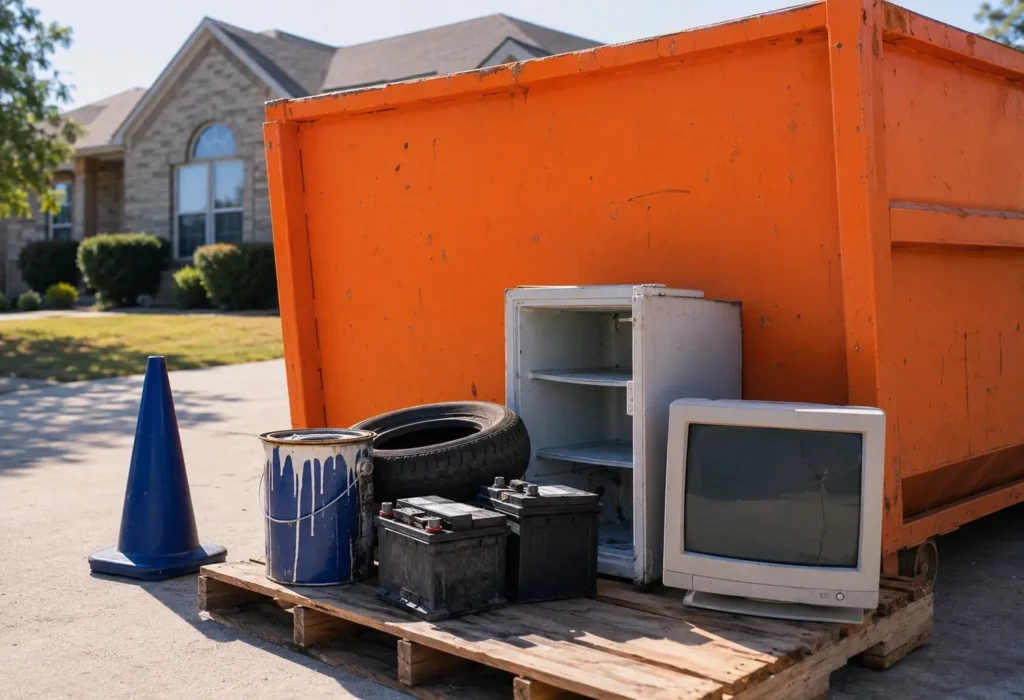
| Hazardous chemicals | Paint, solvents, pesticides | Toxic runoff risk |
| Batteries | Car, lithium, RV batteries | Fire and chemical hazard |
| Appliances with Freon | Fridges, AC units, freezers | Environmental regulation |
| Electronics | TVs, computers, printers | Contains lead and mercury |
| Tires | Car and truck tires | Landfill damage, fire risk |
| Medical waste | Syringes, contaminated items | Health hazard |
| Fuel and oil | Gasoline, motor oil, propane | Flammable |
| Asbestos | Old insulation, tiles | Carcinogenic |
Keep this table close by while you’re loading — it covers roughly 90% of the “can I throw this away” questions people have during a cleanout.
Hazardous Materials You Can Never Put in a Dumpster
Hazardous waste is the single biggest category of banned items, and it’s banned everywhere in the U.S., not just Texas. These materials can leak into soil and groundwater, and most landfills are legally barred from accepting them.
Paint, Solvents & Chemicals
Wet paint, thinners, and household cleaning chemicals are off-limits. If your paint has fully dried out and hardened in the can, some providers will accept it as regular trash — but wet paint always needs a hazardous waste drop-off. The same goes for pool chemicals and adhesives, which can react dangerously with other debris in the dumpster.
Batteries
Standard alkaline AA or AAA batteries are usually fine. Everything else — car batteries, lithium batteries, and battery packs from tools, boats, or RVs — is not. These contain heavy metals and can catch fire when compressed with other trash, which is a real risk on a hot Texas landfill.
Pesticides & Fertilizers
Lawn and garden chemicals count as hazardous waste, even in small amounts. They need to go to a household hazardous waste collection site rather than your dumpster.
Appliances With Freon (Fridges, AC Units, Freezers)
Refrigerators, freezers, and window AC units contain refrigerant gas, which is federally regulated under the Clean Air Act. Before one of these appliances can be thrown away, the Freon has to be professionally removed. Most dumpster companies won’t take these unless you can show the refrigerant has already been extracted. Appliance recyclers and some municipal programs offer this service, often for free.
Electronics (E-Waste) Rules in Texas
Texas has specific e-waste laws that keep televisions, computer monitors, and other electronics out of landfills because they contain lead, mercury, and other toxic components. TVs and computers are actually banned from Texas landfills by state law — not just dumpster company policy. Local electronics recyclers and some retailers (like Best Buy) accept these items free of charge.
Tires, Mattresses & Other Restricted Items
Tires are almost universally banned because they trap gas pockets and can resurface or catch fire in a landfill. Most tire shops will recycle old tires for a small fee when you buy new ones.
Mattresses are a gray area — some dumpster companies accept them, others don’t, and a few charge an extra fee because of how much space they take up. Always confirm with your provider before loading one in.
Other commonly restricted items include:
- Railroad ties (due to chemical treatment)
- Hot water heaters (explosion risk from trapped gas)
- Large concrete or asphalt chunks (weight limit issues — ask about a dedicated heavy-debris dumpster instead)
Texas State Rules: What TCEQ Says About Dumpster Disposal
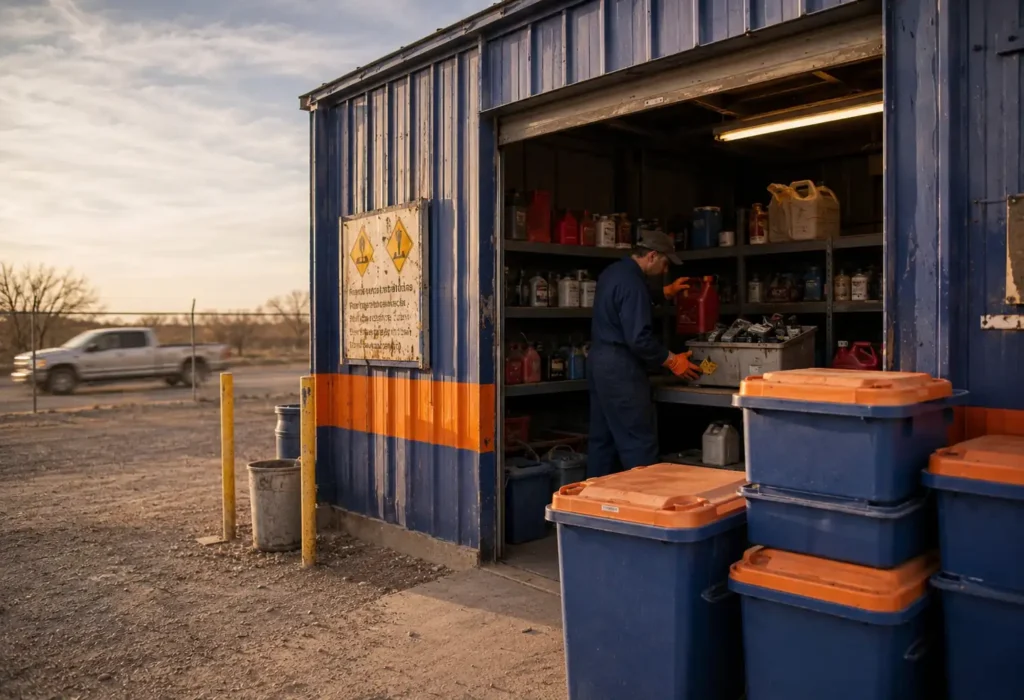
The TCEQ regulates what can legally enter Texas landfills, and its rules go beyond what any single dumpster company decides on its own. Hazardous waste, certain electronics, and untreated medical waste fall under state — not just local — restrictions. If you’re disposing of anything from a business, farm, or construction site, it’s worth checking TCEQ’s household and industrial hazardous waste guidelines, since commercial waste often has stricter rules than household junk.
What Happens If Prohibited Items End Up in Your Dumpster?
If a prohibited item is spotted during pickup or at the landfill, one of a few things typically happens:
- The item gets pulled and left behind at your property, and you’re responsible for disposing of it separately.
- The whole load gets flagged, which can delay pickup while the issue is sorted out.
- You’re charged a contamination or rejection fee, which is often more expensive than proper disposal would have been in the first place.
Sorting hazardous or restricted items out before pickup day is the easiest way to avoid all three.
Where to Dispose of Hazardous Items Near Abilene, TX
If you’re in or around Abilene, most hazardous items — paint, batteries, chemicals, and electronics — can be dropped off at local household hazardous waste collection events or designated recycling centers rather than going in your dumpster. Appliance retailers and auto parts stores in the area also frequently accept batteries and appliances for recycling, often at no cost. If you’re not sure where to take something, ask your dumpster provider — most are happy to point you toward the right facility so your load stays compliant.
What CAN Go in Your Dumpster (Quick Recap)
Once the restricted items are set aside, dumpsters are actually quite flexible. You can typically load:
- Household junk, furniture, and clothing
- Cardboard, paper, and packaging
- Construction debris like drywall, wood, and flooring
- Yard waste such as branches and brush (in limited amounts)
- Dried paint cans and empty aerosol cans
Popular Questions
Got questions? You’re not alone. Here are the ones we hear most from Abilene customers.